

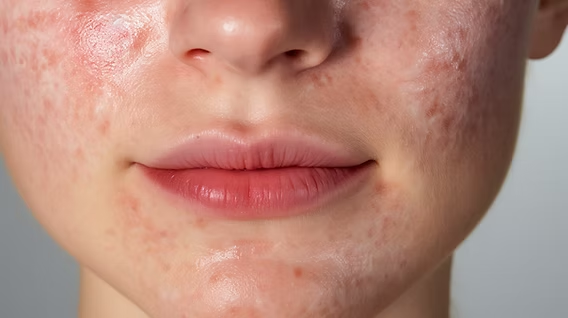
In Singapore’s year-round sunny and humid climate, concerns about uneven skin tone and post-acne marks are extremely common. One of the most frequent reasons patients seek pigmentation removal Singapore treatments is due to lingering dark spots that appear after acne heals.
These marks, known as post-inflammatory hyperpigmentation (PIH), can be frustrating because they often remain visible long after the original breakout has resolved. Many patients mistakenly assume these spots are permanent scars, but PIH is actually a skin response to inflammation rather than true structural scarring.
The good news is that with an effective treatment for pigmentation, these marks can gradually fade over time. However, without proper management, PIH can persist for months or even longer, especially in sun-exposed environments like Singapore.
What Is Post-Inflammatory Hyperpigmentation (PIH)?
Post-inflammatory hyperpigmentation (PIH) refers to the darkened marks that remain on the skin after an inflammatory event such as acne, eczema, or even minor skin injuries. These spots occur when the skin produces excess melanin as part of its natural healing response. Clinically, PIH can appear as flat patches that are brown, dark brown, grey, or sometimes even slightly purplish, depending on skin tone and depth of pigment.
It is important to distinguish PIH from true acne scarring. Unlike atrophic or raised scars, PIH does not involve a change in skin texture. The skin surface remains smooth, but the colour change can still be very noticeable and cosmetically distressing. In many cases, patients seeking pigmentation removal Singapore are actually dealing with PIH rather than permanent scarring, which is a key distinction when choosing the right treatment approach.
Why PIH Is So Common in Singapore
Post-inflammatory hyperpigmentation is particularly prevalent in Singapore due to a combination of environmental and biological factors. With strong ultraviolet (UV) radiation throughout the year, even short periods of sun exposure can trigger increased melanin production. This means that any existing acne marks are more likely to darken and persist without consistent sun protection.
In addition, the hot and humid climate often leads to increased sebum production and more frequent acne breakouts. Each inflammatory acne lesion carries the risk of leaving behind PIH once it heals. Patients who pick or squeeze their pimples further aggravate inflammation, significantly increasing the likelihood of lasting pigmentation.
Skin types commonly found in Singapore, particularly Fitzpatrick skin types III to V, are also more prone to developing PIH due to a more active melanocyte response. As a result, even mild acne can sometimes lead to disproportionately visible pigmentation, making pigmentation removal Singapore a frequently searched and clinically relevant concern in this region.
How Long PIH Lasts Without Treatment
The duration of post-inflammatory hyperpigmentation (PIH) can vary significantly depending on the depth of pigment, severity of inflammation, and individual skin type. In mild cases, where the pigmentation is superficial and limited to the upper layers of the skin, the marks may gradually fade within 3 to 6 months as the skin naturally renews itself.
However, moderate to more persistent PIH can last anywhere from 6 to 12 months, and in some cases even longer if there is repeated acne activity or ongoing sun exposure. Deeper pigmentation, especially in individuals with more reactive melanocytes, may linger for years without targeted intervention.
In Singapore’s tropical climate, consistent UV exposure can slow down the fading process or even cause existing pigmentation to darken further. This is why many patients eventually explore pigmentation removal Singapore options rather than waiting for spontaneous resolution.
Treatment Options for PIH in Pigmentation Removal Singapore
Managing post-inflammatory hyperpigmentation requires a tailored approach depending on skin type, pigment depth, and whether acne is still active. In most cases, a combination of treatments provides the best results.
Topical treatments are usually the first step and work by gradually reducing excess melanin and improving skin renewal, including:
- Vitamin C (brightens and helps reduce oxidative stress)
- Azelaic acid (targets both acne and pigmentation)
- Retinoids (increase cell turnover)
- Niacinamide (helps regulate pigment transfer)
For more persistent PIH, chemical peels can help exfoliate pigmented skin layers and encourage new, more even-toned skin.
What Patients Should Expect From Treatment
Patients seeking pigmentation removal Singapore for PIH should understand that improvement is usually gradual rather than immediate. Most treatments work by slowly reducing melanin production and encouraging skin renewal, so visible lightening often takes several weeks to months. Multiple sessions may be required, especially for deeper or long-standing pigmentation.
Consistency is key, particularly with topical skincare and sun protection, as UV exposure can easily reverse progress. Sunscreen use is essential in Singapore’s climate to prevent existing marks from darkening further. Some patients may also experience mild temporary redness or dryness after procedures such as lasers or chemical peels, but this typically resolves within a few days.
Prevention and Long-Term Pigmentation Control
Preventing post-inflammatory hyperpigmentation is just as important as treating it, especially in Singapore’s high-UV environment. Since PIH often begins with acne, early and effective acne control is key to reducing the risk of new pigmentation forming.
Patients should avoid picking or squeezing pimples, as this significantly increases inflammation and melanin production. Daily sun protection is essential, as UV exposure can darken existing marks and slow recovery. A broad-spectrum sunscreen should be applied consistently, even on cloudy days or when indoors near windows.
A simple maintenance routine with gentle actives can also help maintain even skin tone over time. With the right habits, the need for repeated pigmentation removal Singapore treatments can be reduced, and long-term skin clarity can be better preserved.
Conclusion
Post-inflammatory hyperpigmentation is a common and often persistent concern for many patients in Singapore, especially after acne. While it is not true scarring, PIH can take time to fade and may worsen with ongoing sun exposure or repeated skin inflammation.
With the right combination of skincare, in-clinic treatments, and preventive habits, most cases can be gradually improved, leading to a more even and clearer complexion over time. To explore suitable options for pigmentation removal Singapore and understand the right approach for your skin, you may book a call with our clinic, at:
Cove Aesthetic Clinic: Wheelock Place | Dark Eye Circles | Pigmentation | Laser | Ultherapy
Wheelock Place (Orchard)
501 Orchard Rd, #04-07, Singapore 238880
Phone: +65 8129 8877
WhatsApp: +65 8082 0998
