

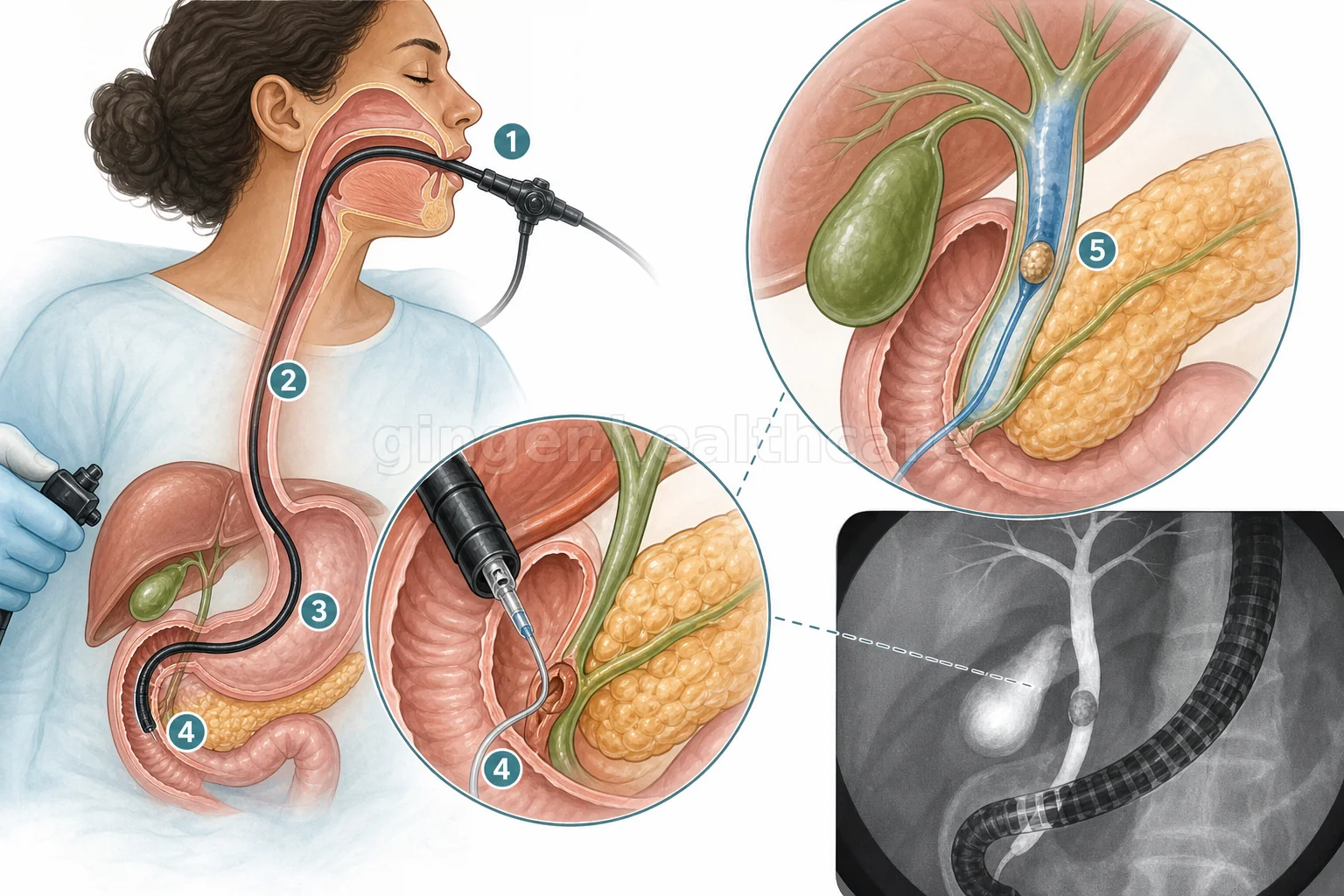
The biliary system consists of the gallbladder and bile ducts, which carry bile from the liver to the small intestine to support digestion. When the bile ducts are affected by conditions such as stones, narrowing or blockages, bile flow may be disrupted, causing symptoms such as upper abdominal pain, jaundice, fever and abnormal liver function tests.
Endoscopic retrograde cholangiopancreatography (ERCP) is a specialised endoscopic procedure that can both investigate and treat certain bile duct problems. Depending on the underlying condition, ERCP may be used to remove bile duct stones, relieve blockages or place a stent to improve bile drainage. However, not every biliary condition requires ERCP, and the appropriate investigation or treatment depends on the suspected cause, symptoms, imaging findings and clinical assessment.
For patients looking for an endoscopy clinic Singapore, understanding when ERCP may be appropriate can help clarify the available treatment options. Read more about ERCP here https://www.leesurgery.com.sg/service/endoscopic-retrograde-cholangiopancreatography-ercp/.
Common Bile Duct Stones
Gallstones are common, but stones that migrate from the gallbladder into the common bile duct can cause more significant problems. This condition, known as choledocholithiasis, may obstruct the flow of bile and result in upper abdominal pain, jaundice, dark urine, pale stools or abnormal liver function tests. Some patients may also develop infection if the blockage leads to cholangitis.
While gallstones confined to the gallbladder do not usually require ERCP, stones within the common bile duct may be treated with the procedure when intervention is indicated. During ERCP, an endoscope is passed through the mouth into the small intestine, allowing the doctor to access the bile duct and remove the stone or improve bile drainage.
Acute Cholangitis and Bile Duct Infection
Acute cholangitis occurs when the bile ducts become infected, often because a blockage prevents bile from draining normally. Common causes include common bile duct stones, strictures and, in some cases, other forms of biliary obstruction. Patients may develop fever, chills, upper abdominal pain and jaundice, although symptoms can vary. Because cholangitis can become serious, prompt medical assessment is important.
Treatment typically involves antibiotics and measures to relieve the obstruction when necessary. ERCP may be used to restore bile drainage by removing a blocking stone, inserting a stent or performing another appropriate intervention. The decision to perform ERCP depends on the severity of the infection, the suspected cause of obstruction and findings from blood tests and imaging.
Biliary Strictures
A biliary stricture is a narrowing of one of the bile ducts that can restrict the normal flow of bile. It may develop due to previous surgery, inflammation, pancreatitis or other benign conditions, although some strictures may be associated with cancers affecting the bile ducts, pancreas or nearby structures. Depending on the degree and location of the narrowing, patients may experience jaundice, abdominal discomfort, dark urine or abnormal liver function tests.
ERCP can help assess the bile ducts and, when appropriate, allow treatment during the same procedure. This may include dilating the narrowed area or placing a stent to improve bile drainage. Further tests may be needed to determine the underlying cause before or during treatment.
Obstructive Jaundice and Biliary Obstruction
Obstructive jaundice develops when bile cannot flow normally from the liver into the small intestine, causing bilirubin to build up in the bloodstream. Patients may notice yellowing of the skin or eyes, dark urine, pale stools and sometimes abdominal pain or itching. Bile duct stones are a common cause, but obstruction can also result from biliary strictures or tumours affecting the bile ducts, pancreas or surrounding structures.
Investigations such as blood tests, ultrasound, CT or MRCP may help identify the cause and location of the blockage. When intervention is needed to restore bile drainage, ERCP may allow a doctor to remove a stone, widen a narrowed duct or place a stent, depending on the underlying problem.
Other Biliary Situations Where ERCP May Be Considered
ERCP may also have a role in other biliary conditions where the bile ducts need to be accessed or bile drainage needs to be improved. Depending on the underlying problem, it may be considered for:
- Bile leaks:A leak can occasionally occur after gallbladder or other upper abdominal surgery. ERCP may help reduce pressure within the bile ducts and support healing of the leak.
- Recurrent bile duct stones:Patients who develop repeated stones in the common bile duct may require ERCP to remove stones and restore normal bile drainage.
- Selected pancreaticobiliary conditions:Certain conditions affecting the pancreas or bile ducts can cause obstruction and may require endoscopic intervention.
- Biliary obstruction requiring drainage:In some cases, ERCP can be used to place a stent to help bile flow past a narrowed or blocked section of the duct.
As ERCP is an invasive procedure, it is generally performed when there is a clear therapeutic reason to intervene. Potential complications include pancreatitis, bleeding, infection and, less commonly, perforation.
Conclusion
ERCP can play an important role in managing selected biliary conditions, particularly when a blockage needs to be removed or bile drainage needs to be restored. Conditions such as common bile duct stones, cholangitis, biliary strictures and obstructive jaundice may require different approaches depending on their underlying cause. If you have symptoms or investigations suggesting a biliary problem, a medical assessment can help determine the appropriate next step
For assessment of symptoms that may be related to biliary or digestive health, you can arrange a consultation with our doctor, at:
Dr Lee Chin Li – Lee Surgery and Endoscopy | Colorectal Surgery | Gallbladder Surgery Singapore
6 Napier Rd, #04-16 Gleneagles Medical Centre, Singapore 258499
Phone: +65 6255 0720
