

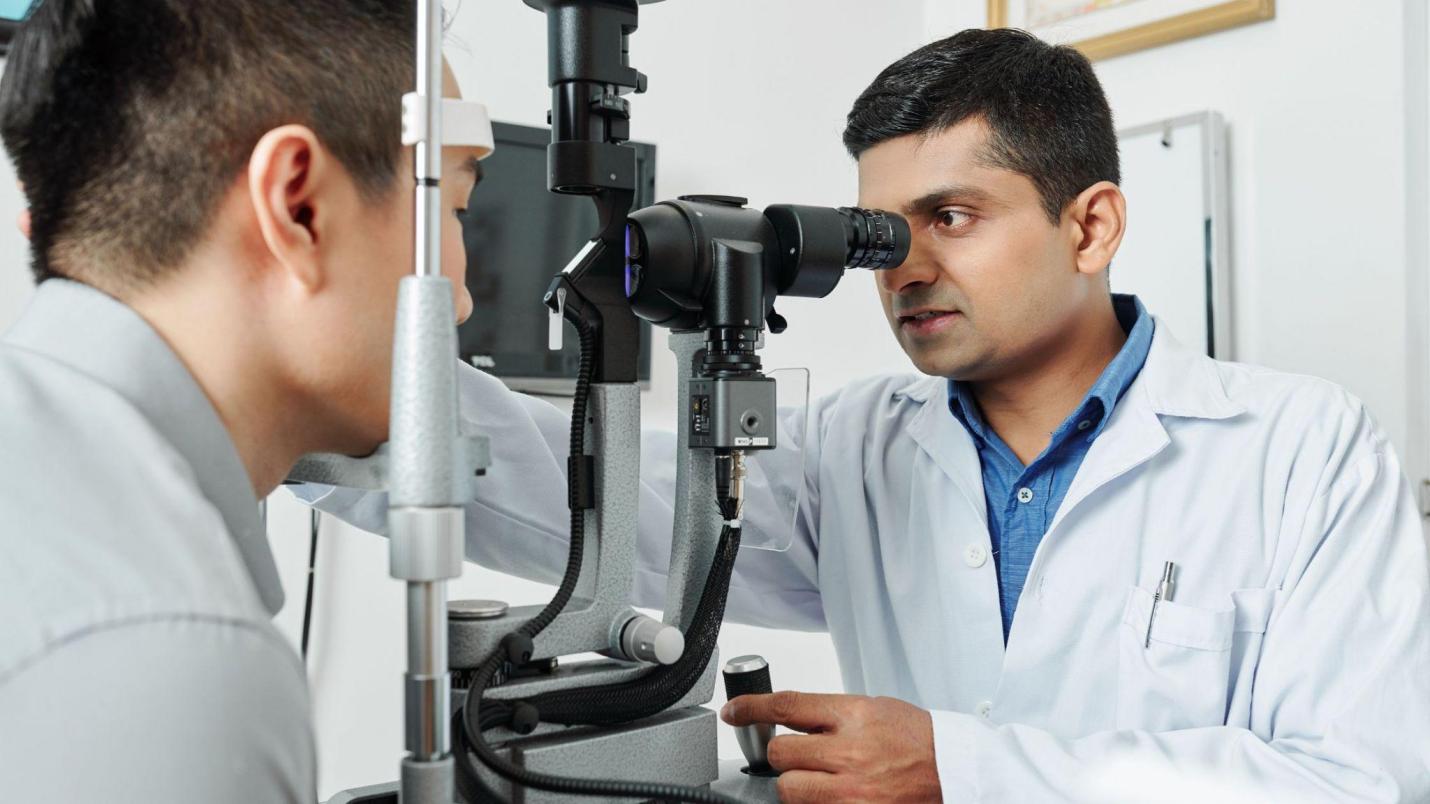
A comprehensive eye check-up includes several vision tests that assess different aspects of eyesight and eye health. These may include a visual acuity test, a refraction test, and many more. Each test serves a specific purpose, from checking the need for spectacles to identifying early signs of eye conditions. Together, they give the doctor a complete understanding of howclearly and comfortably the eyes are functioning.
Here, you will find out the common vision tests performed during a comprehensive eye check-up.
Visual Acuity Test for Distance and Near Vision
This is often the first test during an eye check-up. An eye doctor asks the patient to read letters or symbols from a fixed distance and sometimes from a near-reading card. It helps identify blurred vision, reading difficulty or changes that may need further evaluation.
Refraction Test to Determine Corrective Lens Power
A refraction test helps find whether glasses or contact lenses are needed. The eye doctor may ask which lens option looks clearer while viewing letters through a testing device. An ophthalmologist can then use the result to suggest a suitable corrective power for clearer everyday vision.
Eye Muscle Movement and Alignment Assessment
This test checks how both eyes move and work together. The doctor may ask the patient to follow a light or an object in different directions. Good eye care also includes checking alignment, as eye strain, double vision or focusing concerns may sometimes be linked to muscle coordination.
Visual Field Test to Check Peripheral Vision
A visual field test looks at side vision, which is important for daily activities such as walking, driving and noticing movement around you. An eye surgeon may recommend this test when there is a need to assess the full range of vision more carefully.
Colour Vision Test to Detect Colour Blindness
Colour vision testing helps identify difficulty in seeing certain colours correctly. The patient may be asked to recognise numbers, shapes or patterns within coloured plates. This test is simple, quick and useful for understanding how the eyes process colour differences in practical situations.
Depth Perception Test for Three-Dimensional Vision
Depth perception allows a person to judge distance, space and object position. During this test, the doctor may check how both eyes work together to create a three-dimensional view. It can be useful for people who face difficulty with steps, sports or accurate distance judgement.
Conclusion
A comprehensive eye check-up brings together several tests to understand vision, eye coordination and internal eye health. Each test gives a different piece of information, helping the doctor make a more complete assessment.
Regular eye checks can be useful even when vision seems normal, especially for people with changing eyesight, screen strain or a family history of eye concerns. Timely consultation supports better awareness and responsible eye care decisions.
FAQs
1. How often should I get a comprehensive eye check-up?
Most adults can consider an eye check-up once a year, especially if they use screens often, wear glasses or notice vision changes.
2. Are these vision tests painful?
No, most common vision tests are simple and painless. They usually involve reading letters, following lights or identifying colours.
3. Can an eye check-up detect hidden problems?
Yes, it can help doctors notice early signs of eye strain, weak vision, alignment issues or other concerns.
